

25 Years After – Never Again Srebrenica
Ido Rosenzweig
“Never again” is one of the most common expressions heard when referring to the Holocaust. The international community and the Jewish community have repeatedly promised that they will not stand still again. This promise was enshrined with the signature of many of the states, including Israel, of the Convention on the Prevention and Punishment of the Crime of Genocide of 1948 (the Genocide Convention). Nevertheless, in the 1990s the world observed two cases of genocide, in Bosnia and in Rwanda, and nothing was done to prevent them.
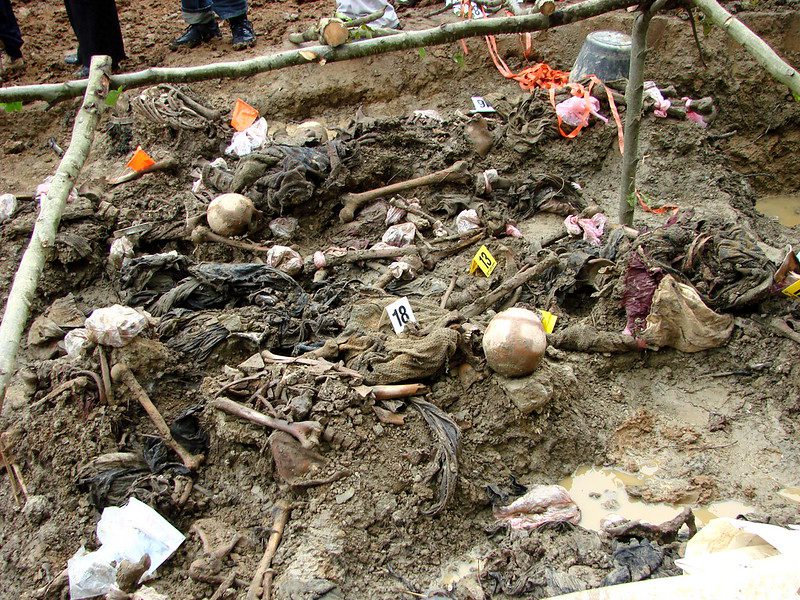
Recently, we marked 25 years since the horrible massacre in Srebrenica, in which Bosnian-Serb forces murdered approximately 8,000 Bosnian-Muslims (Bosniaks) men and boys, during a period of ten days, in what is considered to be the worst act of mass killing in Europe since World War II. The purpose of the massacre was to “clean” the area of Muslims during the Bosnia war. Dutch forces assigned to the area as part of the UN peacekeeping forces transferred thousands of Bosniaks who asked for safety in the vicinity of the military facility into the hands of the Bosnian-Serbs. While promising that everything would be fine and the Bosniaks would be kept safe, in fact, they did nothing to prevent the killings.
The legal repercussions of the treatment of the massacre in Srebrenica took many years and some still continue. In 2007 the International Court of Justice (ICJ) held that the events in Srebrenica qualify as “Genocide” in accordance with the Genocide Convention. The International Criminal Tribunal for the Former Yugoslavia (ICTY), established by the UN Security Council following the events of the war in Bosnia, has convicted six Bosnian-Serbs for their role in the Srebrenica genocide. Among the six were Ratko Mladic, then the Army of Republika Srpska, who was convicted in 2017 (his appeal is still ongoing), and Radovan Karadzic, the President of Republika Srpska during the Bosnian War, who was convicted in 2016. In July 2019, the Dutch Supreme Court held that the Netherlands is responsible for the death of 350 Bosniaks who took shelter inside the Dutch forces military compound, by refusing to allow them to maintain their shelter.
Undoubtedly, accountability for acts of genocide, crimes against humanity, and war crimes, is extremely important. But the wheels of justice turn slowly. Prevention is the key. The Srebrenica genocide took place 25 years ago, the Rwanda genocide 26 years ago and recently we have witnessed a genocide in Myanmar.
The International Association of Jewish Lawyers and Jurists (IJL), established in 1969, sees itself obliged to act relentlessly in international and the legal arenas against antisemitism and Holocaust denial, as well as against crimes against humanity, war crimes, racism, xenophobia and genocide. As the legal arm of the Jewish People, we see it as our moral duty to commemorate every genocide. It is our obligation to call upon the world to act in order that horrendous actions like the ones that occurred in Srebrenica will never happen again.