

Legal commentary
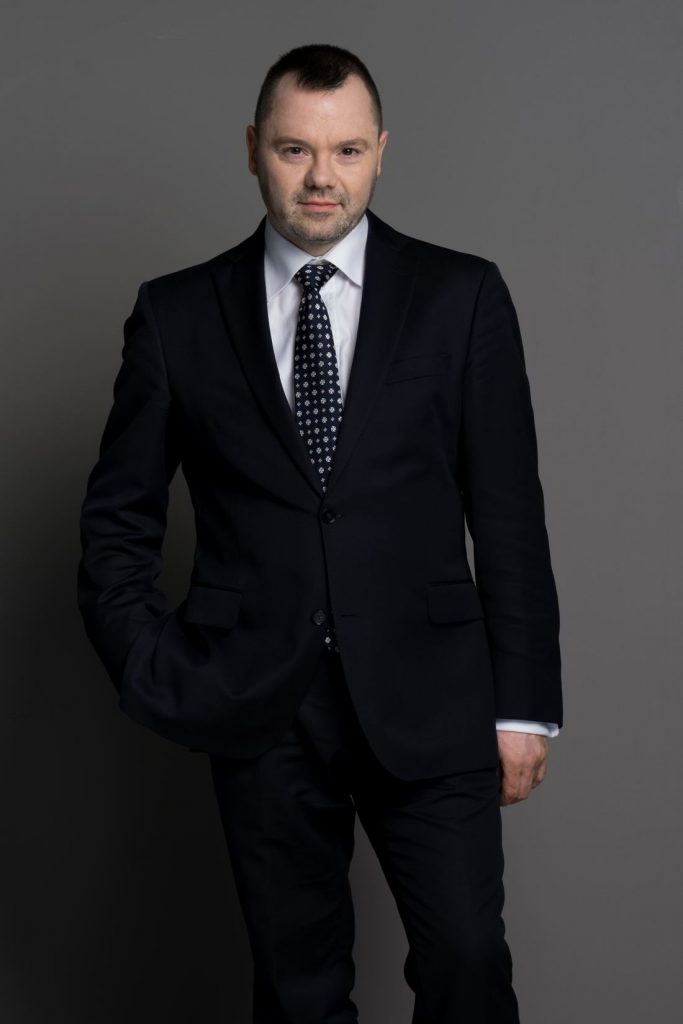
by Wojciech Kozlowski, attorney at law, partner at Warsaw office of Dentons, representing The International Association of Jewish Lawyers and Jurists in front of the Polish Constitutional Tribunal
Why the initiative?
We want to show that Poland as democracy and as a rule of law country has no place for criminal laws which discourage debate on difficult and sensitive historical issues, even if for some reason we believe that certain voices in the debate are uncomfortable for us or we see them as not being true to historical facts.
A balanced opinion
The amicus curiae briefis so far the only voice of a non-governmental organization in the proceedings before the Constitutional Court. It is an “external” voice and as suchoffers a balanced opinion that eschews political issues and the related conflict that exists among the main actors involved in this matter in Poland. The brief is a legal analysis done at the top professional level.
Main conclusion
The Amicus Curiae brief demonstrates that, even if guided by the need to protect the good name of the Polish Nation or Polish State, the use of criminal law to restrict freedom of speech and public debate in terms of statements on important historical facts goes beyond the limits of what is, whether under the Polish Constitution or international law, an acceptable restriction of those freedoms in a democratic rule of law.
In addition, riddled by defective design and uncertainty as to its application, the impugned law will give rise to arbitrary enforcement, which is an unacceptable criminal law outcome, and will create the so-called chilling effect which will bar any historical debate about responsibility for World War II crimes (whereas any debate must necessarily allow for some room for error in opinion, otherwise no debate or quest for truth is possible).
The legal context
- The impugned provisions restrict freedom of speech to a greater degree than the often criticised criminal defamation laws (which are frequently given as a prime example of a freedom-of-the-press restriction and a cause of the chilling effect). For all practical purposes, the INRA liability for defamation of the Polish Nation or Polish State could only be avoided if the statement is true (i.e. based on proven facts). What this means is that, for example, a journalist relying on a source (e.g. on some other publication) will not be free from risk of criminal liability, especially if it turns out later on that the facts given by the source are not true. This will obviously produce the chilling effect on public debate so that sensitive topics related to the history of World War II crimes will be avoided “just in case”.
- The brief adds value by offering an in-depth analysis of the international law standards of freedom of speech, including mainly in the context of historical statements, and by demonstrating the true differences between the analysed law and the legal prohibitions of genocide denial, including Holocaust denial. The brief points to the new law’s weaknesses which, if it comes under scrutiny, such as by the European Court of Human Rights in Strasbourg, can likely be considered to violate human rights standards, including the freedom of expression.
International aspects
- Having legislated the impugned law, Poland joined a very narrow group of countries (universally said to be far from the Western standard of democracy) which choose to criminally prosecute people for statements about historical facts that may be uncomfortable for what forms a majority in the given country. No such solutions exist in any democratic country of Europe or North America.
- The brief demonstrates that the law in question is of great relevance for the international public opinion for at least two reasons. Firstly, it authorises prosecution of foreign nationals for statements made outside Poland. Secondly, the World War II trauma affected and continues to affect people in numerous countries world-wide, many of whom still remember the tragic developments of that time. Therefore, any such regulation, and particularly one that so much interferes with the free historical debate as to use the power of criminal law, will arouse the interest of people around the globe. By taking this brief into consideration, the Constitutional Court will show that it hears the voice and opinion of many people from different countries who may be directly or indirectly affected by the impugned provisions.
- The Constitutional Court’s judgement holding the questioned INRA provisions unconstitutional in accordance with the presidential application would demonstrate that the Polish constitutional system (following international law) attaches a greater weight to freedom of speech as a fundamental tenet of democratic societies than to ill-defined legal measures pushed forward with the aim of protecting the State and the Nation, without seeing that their reputation is built on the truth and not on statutory restrictions of the public debate about what historical truth looks like.
Petition
- The argument set out in the brief supports the critical view of the new law expounded by the presidential application. However, concerned about the presidential application being potentially too narrow in its scope of appeal (thus possibly leading to certain constitutionality aspects remaining unconsidered by the Court in relation to the law in question), we use the brief to petition the President to expand and elaborate on his application.
- The Amicus Curiae brief argues for the unconstitutionality of the INRA provisions which permit the prosecution of crimes that would involve making untrue statements about the responsibility of the Polish Nation or Polish State for crimes committed during the Second World War. In this vein, the authors petition the Constitutional Court to declare that the provisions are incompatible with the Constitution. According to the brief, the lawmakers failed to demonstrate that civil law (which, as opposed to criminal law, is less oppressiveregarding freedom of speech) does not offer measures which would sufficiently protect the good name of the Polish Nation and Polish State and so achieve the desired outcome.
| Wojciech Kozłowski Partner |
D +48 22 242 56 95 | M +48 664 191 438
wojciech.kozlowski@dentons.com
https://www.dentons.com/pl/wojciech-kozlowski
Dentons Europe Dąbrowski i Wspólnicy sp. k.
Rondo ONZ 1, 00-124 Warsaw, Poland.